
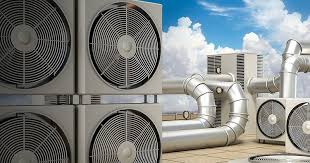
The HVAC system is in charge of keeping an enclosed space at the proper temperature. Cars, homes, business buildings, ships, etc. are examples of these enclosed spaces. Therefore, a thorough understanding of how to operate HVAC equipment is essential for all HVAC specialists.
Professionals can only properly install and maintain all kinds of HVAC systems with the aid of user-friendly HVAC tools. Employers are required to furnish costly tool sets in certain locations. Refrigerant scales, leak detectors, cordless drills, and reciprocating saws are a few examples.
In general, technicians will need to purchase a few basic HVAC tools in addition to a few additional practical items. If any of their technicians’ tools break while they are working, almost all companies are required to reimburse them. As a result, it’s critical that professionals are aware of the best HVAC equipment they need to have on hand.
A comprehensive toolset for an HVAC site engineer consists of precise diagnostic instruments for testing and commissioning, specialist equipment for handling refrigerant, and basic hand tools for installation. To confirm installation accuracy, pressure test piping, evacuate systems, and guarantee peak performance, a well-prepared site engineer should have the necessary equipment.
HVAC Tools List
HVAC Tools for Installation (Mechanical & Ductwork)
In order to assemble units, pipes, and ductwork in accordance with design standards, several tools are necessary.
Drills: Another crucial equipment that increases the adaptability of your repair technicians is a cordless, battery-operated drill. To ensure that technicians never run out of drill power while on the job site, keep a charging battery in toolkit. We suggest a cordless drill with many bits and a minimum of 24 volts.
Cordless Drill/Impact Driver: For maximum drilling and fastening versatility, a 12V–24V brushless hammer
drill is ideal.
Sheet Metal Shears/Aviation Snips: Red (left), Green (right), and Yellow (straight) sheet metal shears/aviation snips are used to cut ducting. Site engineers/ HVAC technicians can bend or flatten sheet metal by hand, thanks to hand seamers. They can cut sheet metal to size with ease thanks to snips. Once more, insulated grips facilitate both tasks.
Cutters: To cut through anything on the job, metal and tubing cutters (like tin snips) are crucial HVAC equipment. When you first start working in HVAC, It’s advisable starting with a smaller set of cutters, such quarter-inch or half-inch cutters, but as you advance to managing a larger range of projects, you should add a wider set.
Note: As an all-in-one instrument, a wire cutter and wire remover can be purchased together.
Tube Cutters & Pipe Cutters: Pipe and tube cutters: PVC and copper pipe cutters in both small and big sizes.
Flaring and Swaging Tool Set: HVAC technicians can create a mechanical junction to join or seal copper tubing using flaring tools. HVAC specialists can connect tubes to one another or to other fittings by making a flare connection, sometimes in conjunction with swaging equipment.
Magnetic Bubble Level: To make sure thermostats and indoor/outdoor units are level, use a magnetic bubble level.
Wrenches: A comprehensive collection of HVAC tools includes a variety of wrenches, ranging from crescent and pipe wrenches to fixed and adjustable wrenches. In your HVAC toolkit, keep pipe wrenches to loosen pipe connections and small, medium, and large wrenches to tackle any task.
Pipe Wrenches & Channel Locks: Various sizes (8″–14″) of pipe wrenches and channel locks are available for adjusting nuts and pipes.
Torque wrench: Especially in VRF/VRV systems, this tool is essential for tightening flared nuts to manufacturer requirements.
Service Wrench: Compressor valve opening and shutting require the use of a service wrench.
Pipe Wrenches & Channel Locks: Various sizes (8″–14″) of pipe wrenches and channel locks are available for adjusting nuts and pipes.
HVAC Tools for Testing and Commissioning
These devices guarantee that the system balances water and airflow and functions within the planned parameters.
Refrigerant Charging Scale: For accurate refrigerant charge measurement during startup. The weight of a refrigerant cylinder is determined using a refrigerant scale. When performing refrigerant recovery during air conditioning unit repairs and replacements, this aids HVAC technicians in precisely measuring the weight of refrigerant.
Multimeter/Clamp Meter: To test voltage, amperage (current draw), resistance, and continuity in motors, compressors, and control circuits, a True-RMS multimeter is necessary. This instrument serves as a safety feature as well. Testing for safety is crucial while working close to live wires and electrical risks. To check voltage and determine whether electricity is present, keep a multimeter in your toolbox.
Manometer: Used to gauge static pressure across filters and coils as well as in ducts. Heating, ventilation, and air conditioning system air pressure is measured by an HVAC specialist using a manometer. It can assess airflow and pressure in ducts, as well as across filters and coils, and is available in both analog and digital formats.
Digital Micron Gauge: A digital micron gauge is necessary to confirm that the vacuum pump has eliminated all moisture throughout the evacuation process.
Refrigerant Leak Detector: An electronic device that finds leaks in coils and couplings. Refrigerant leak detectors are used by HVAC service technicians to identify damp areas. This apparatus serves as a tester to determine where a refrigerant leak originates.
Thermal Imaging Camera: HVAC engineers must use extremely general information to detect complicated issues for customers. An indispensable HVAC tool, thermal imaging cameras allow technicians to quickly and precisely determine the underlying problems.
Nitrogen Regulator and Tank: For cleansing lines and pressure testing (holding pressure). A nitrogen regulator functions as a valve for controlling pressure. It transforms a highly compressed gas or liquid into a form that is easier to use. The high pressure permits the gas or liquid to be released all at once in the absence of a nitrogen regulator.
Digital Thermometer/Hygrometer (Psychrometer): Used to measure relative humidity and air temperature in order to determine air mixtures and detect control problems. In the HVAC sector, temperature regulation is crucial. Invest in a portable, durable, and efficient digital thermometer to adhere to state standards and provide exceptional customer service.
Anemometer (Vane or Hot-Wire): Air velocity and airflow (CFM) from diffusers and ducts can be measured with an anemometer (Vane or Hot-Wire).
Balometer /Flow Hood: At airports, balometers and flow hoods are used to measure air volume directly.
General & Electrical HVAC Tools Name List
Utility knife: For opening packaging and cutting insulation.
11-in-1 Screwdriver/Nut Driver Set: Panel screws require magnetic nut drivers (1/4″ and 5/16″).
Rechargeable Flashlight/Headlamp: To properly inspect heaters and air conditioners, HVAC service technicians always require a dependable flashlight. When operating in dimly lit areas, headlamps are also useful for freeing up your technicians’ hands.
Fuse Puller: For secure electrical component inspection.
Wire Strippers & Crimpers: To prepare electrical connections, use wire strippers and crimpers.A crimper allows techs to wrinkle certain types of metal to make them conform to the next section of piping.
Tape Measure (Magnetic): A 25-foot range is advised for the magnetic tape measure.
Protective gear (PPE)
Anti-smashing Safety Shoes: On construction sites, anti-smashing safety shoes are required.
Respirator/Mask: Defence against dust and insulation fibers.
Safety goggles or glasses: To shield eyes from toxins and debris.
Insulated Gloves/Work Gloves: Work gloves and insulated gloves offer defence against hot surfaces, sharp objects, and refrigerant chemicals.
Crucial Digital Tools and Documentation
Commissioning Checklists: Digital or pre-printed forms used to record airflows, temperatures, pressures, and motor currents.
Smart App Tools: Smartphone applications for fault code diagnostics, duct sizing (Ductulator), and psychrometric calculations.
Advanced Air Conditioning and HVAC Tools Name List (H3)
Despite being more sophisticated and costly, these HVAC tools are nevertheless crucial. These specialized instruments are usually offered by HVAC businesses to assist in maintaining the functionality of their clients’ HVAC equipment.
Core Removal: HVAC tools such as a core removal tool come to the rescue in many cases. When dealing with broken cores, this tool assists your techs with removal and replacement.
Straightening Coil Fin: When air conditioner condenser coils get blocked, twisted, or unclean, a coil fin straightener can help remove debris. In order to enhance heat exchange (hex) and air movement, service technicians use this air conditioning tool to clean and straighten the coils. These air conditioning tools are really helpful and reasonably priced.
Saw: The best saw for cutting through materials in the majority of HVAC operations, according to HVAC contractors, is a reciprocating saw blade like the Sawzall. The Sawzall is long-lasting, which is important. To prevent dull blade use, the blades must be changed on a regular basis.
Caulking Gun: Site Engineers/ technicians may patch gaps and seal air ducts with a dripless caulking gun. To prevent repeat mishaps, keep your caulking gun in good operating order.
Pumps: The strength of your HVAC vacuum pump must be sufficient to eliminate any moisture from the lines.
Awl: The awl is used by HVAC technicians to score sheet metal so that it may be cut straight. When needed, awls can also be used to punch holes in sheetrock, wood, or sheet metal.
Solvent Flushing: The likelihood of blockages within refrigeration lines increases with line age. Having a flushing solvent on hand keeps your clients’ appliances operating as efficiently as possible and helps to swiftly remove impurities from the line.
Conclusion
In conclusion, having the proper HVAC tools is crucial for guaranteeing precise installation, effective testing, and dependable commissioning of HVAC systems—it is not merely a convenience issue. Every tool, from simple hand tools and ductwork equipment to sophisticated diagnostic tools like multimeters, micrometer gauges, and thermal imaging cameras, is essential to producing high-performance systems that satisfy industry requirements.
Investing in a complete and well-organized toolset for HVAC site engineers and technicians increases job site safety, decreases downtime, and boosts productivity. The utilization of appropriate PPE and digital technologies, which promote accuracy, documentation, and compliance in contemporary HVAC projects, is equally crucial.
Professionals will have a competitive advantage if they stay up to date on the newest tools and best practices as the HVAC industry continues to change with smarter technologies and more stringent efficiency requirements. The correct HVAC tools enable you to do high-quality work, maximize system performance, and guarantee long-term dependability for every project, whether you’re managing installation, troubleshooting, or commissioning.