

Table of Content
- Introduction
- Building Information Modelling (BIM)
- Integrated ERP and Project Management Platforms
- Drone and Aerial Survey Technology
- IoT-Based Site Monitoring and Safety Systems
- AI and Predictive Analytics
- Conclusion – Start Somewhere,Then Build From There
1.Introduction
The EPC sector in India is booming and the pressure that comes with that boom is very real.Contractors are operating on shorter deadlines, very slender margins, multi-disciplinary scopes and clients that demand real time project visibility.Yet walk into the offices of many firms on the list of EPC in India and you will still find project tracking happening in Excel sheets, site reports arriving via WhatsApp, and design clashes being discovered only after steel has been erected.
The difference between the current state of most contractors and the direction the industry takes is large – yet it is narrowing at a rapid rate. Technology is not the preserve of the global giants anymore. Specifically designed digital resources are now available and affordable as well as becoming necessary to any contractor who desires to remain competitive. These are the five technology solutions that every Indian EPC contractor should put into serious consideration to adopt.
2. Building Information Modelling (BIM)
If your electrical team and your structural team have ever met at the same point on the same day, and found that their plans were incompatible with each other, you need not have a more powerful incentive than this to realize why BIM exists
BIM enables engineers in all fields of engineering (civil, structural, mechanical, electrical, piping) to collaborate in one smart 3D model. All components of that model entail data material specifications, installation steps, cost codes, maintenance schedules. In the event that two systems are in conflict the software throws a red flag at once – not at the location, not at the time of commissioning, but weeks or months before construction has even started.
For electrical EPC companies in India, the value of BIM is particularly sharp.They can be modelled, reviewed, and optimised prior to the first trench being dug to design cable routing, switchgear placement, substation layouts and earthing network designs. Rework savings in itself, up to 5 to 15 percent of the overall project costs on complex jobs, most frequently cover the investment in the initial project.
Tools are widely used across the EPC sector in India and have local implementation partners who understand Indian project conditions. Large clients and government agencies are also starting to require BIM compliance with their tenders and this means that this is no longer optional to the contractor in the pursuit of larger contracts.
3. Integrated ERP and Project Management Platforms
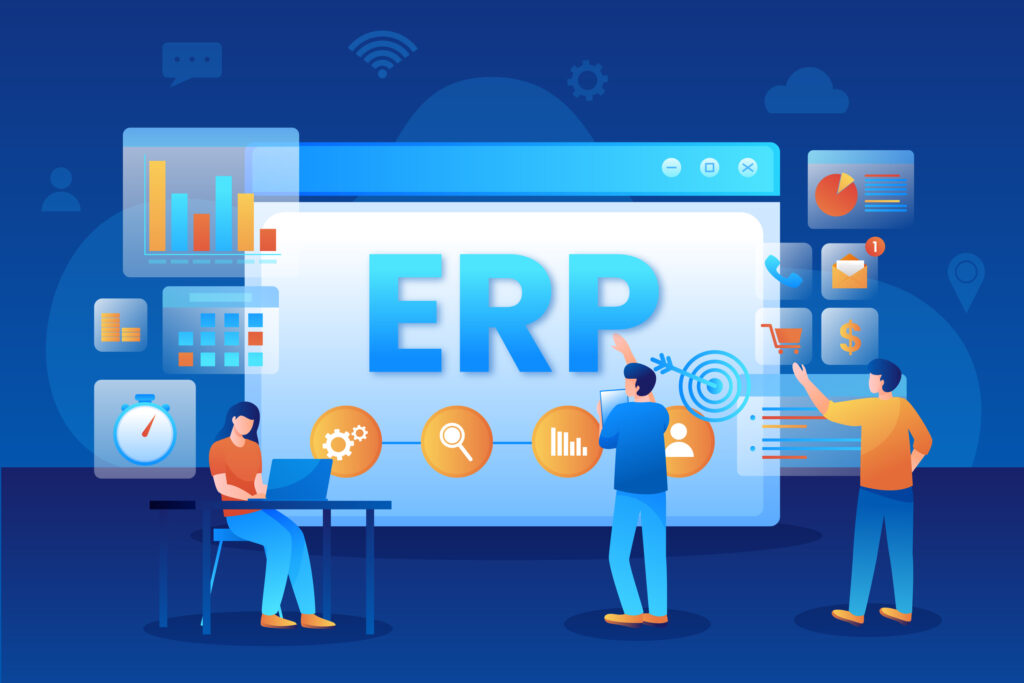
Many firms on the list of EPC in India managing multiple concurrent projects across different states have found this kind of centralised control to be genuinely transformative.
The following question is one that should be honestly asked: how long does your team take to respond to the question where exactly are we on budget and schedule? When the solution consists of three individuals, two spreadsheets, and a phone call to the site, then that is the problem.
One of the most invisible costs to any EPC business is fragmented data. Engineering, procurement, finance, and site execution all churn out colossal volumes of information on a daily basis but when information is siloed, then leadership is constantly operating using incomplete or old images.
All that data is consolidated with integrated ERP suites meant to help construction and EPC companies. You can trace purchase orders to the approved budget, trace material delivery schedules to the construction schedule, indicate subcontractor billing settlements before they get out of hand, and you can have a real-time cost-at-completion forecast.
Many firms on the list of EPC in India managing multiple concurrent projects across different states have found this kind of centralised control to be genuinely transformative. The fact that your project director in Chennai can observe the live pictures of what is happening at your location in Rajasthan without being held until Monday morning and the report comes makes the decision-making process faster, smarter, and much less reactive.
4. Drone and Aerial Survey Technology
It is hard to imagine that big EPC projects in India can fit within a small boundary. Hundreds of acres are covered with solar farms. Difficult terrain is traversed by transmission lines. The rivers, hills, and forests are crossed by road and pipeline routes. The conventional surveys of these sites are very time consuming, costly and in certain instances, are really unsafe to the ground crews.
This is being transformed by the drones that contain high-resolution cameras, LiDAR sensors, and GPS. What would require a conventional survey crew several weeks to map can be mapped in a matter of days and the final products, orthomosaic maps, 3D point clouds, topographic contours can be directly inputted into engineering design software.
However, the worth of drones is not limited to the survey. Across the EPC sector in India, contractors are deploying UAVs throughout the project lifecycle.Volume calculations for earthworks and stockpile management, height inspections, and thermal scans of solar panels and electrical installation are all applications already being used on large Indian infrastructure projects.
For electrical EPC companies in India working on transmission and distribution projects, drone-based inspection of live line infrastructure reduces the need to send crews into dangerous positions and cuts inspection time dramatically. The return on investment is likely to be realized in the initial couple of deployments.
5. IoT-Based Site Monitoring and Safety Systems
The construction sites are high risk, complicated environments. The EPC sector in India is unfortunately no stranger to site accidents, equipment failures, and the compliance headaches that follow.However, technology is ensuring that changing the culture of safety to be reactive, to be proactive is actually attainable.
Internet of Things (IoT) systems install systems of sensors throughout a location to gather real-time data with high frequency — equipment position and idleness, concrete curing conditions, structure shakes during blasting or piling, air quality in cramped places, and laborer position using GPS-enabled devices. All these are fed into a central dashboard which provides site managers and safety officers with a real time accurate view of what is going on the ground at any particular time.
Smart personal protective equipment (PPE) is one of the more visible applications picking up traction among firms on the list of EPC in India.There can be helmet sensors that detect the impact and send an urgent notification. GPS tracker vests make sure that no one gets into a crime or dangerous area without a permit. Biometric gate systems are automated, so that only trained workers are allowed access into certain areas within the site.
IoT also directly affects the bottom line besides safety. The utilisation data of equipment often show that a large plant and equipment is idled during 20 to 30 percent working hours. When you have the ability to see that data, you can do something with it, redistributing assets among projects, renegotiating hire deals, or planning preventive maintenance before a failure that can lead to an expensive delay.
6. AI and Predictive Analytics
Artificial Intelligence is perhaps the technology that is shaping the construction and project management in the most significant way and at the same time causing the most curiosity and confusion. However, once the buzzwords are removed, it is very simple: AI can be used to make better predictions and better decisions by using the data you already possess.
Predictive analytics applications evaluate trends in historical project data, present site development dynamics, weather predictions, vendor performance history, and unique commodity price changes in order to recognise risks before they occur. A schedule delay that would have caught the project team unawares during week 14 may be identified as a high probability occurrence during week 8 – six weeks to work with the team instead of scrambling to salvage the situation.
For electrical EPC companies in India, this kind of foresight is particularly valuable in procurement. Lead times of transformer and high-voltage switchgear made by Indian manufacturers may be between 12 and 24 weeks. AI-based procurement applications may be useful to ensure that the team is keeping an eye on the capacity of the vendor, identifying price changes in certain raw materials, such as copper and steel, and placing purchase orders at the most appropriate time to safeguard the project timeline without overspending money on early procurement.
Another field of use of AI is computer vision, which can be used to monitor the safety of the site by studying live CCTV footage to identify PPE violations, unsafe working practices, and unauthorized access in real time, without a human being to monitor every screen. This capability is no longer limited to the largest contractors; cloud-based platforms have brought the cost down to a point where mid-tier firms across the EPC sector in India can access it.
7. Conclusion – Start Somewhere,Then Build From There
Implementation of technology does not entail a total and instant change in the way your business is conducted in the EPC sector in India. The contractors who derive the greatest benefit when using these tools are not those which implemented everything immediately – they are those that identified one or two pain points, tested the appropriate solution, quantified the effect, and expanded out of there.
Whether you are a large firm managing a diversified portfolio or a growing player trying to break into bigger tenders on the list of EPC in India, the direction of travel is clear. Projects are becoming increasingly sophisticated, customer demands are increasing and the contractors that are able to prove their capability in terms of technology as well as their technical expertise will always get the better projects at improved rates.
The tools are available. The case is proven. The only real question is how soon you start.